

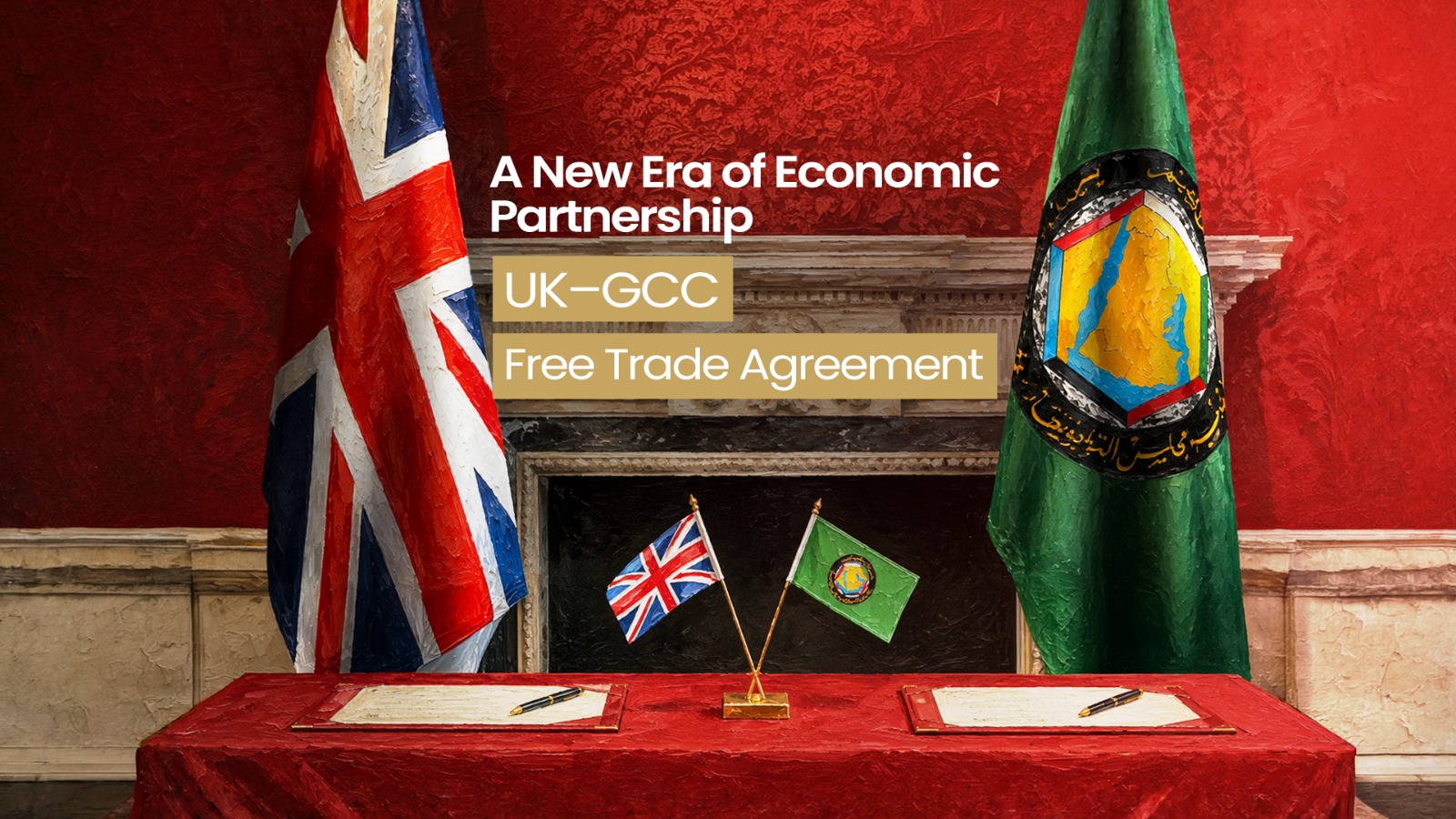
The newly concluded GCC-UK Free Trade Agreement marks an important milestone in trade relations between the United Kingdom and the Gulf Cooperation Council. The agreement is expected to reduce trade barriers, remove tariffs on key goods, strengthen access to services, and create new business opportunities across the UAE, Saudi Arabia, Bahrain, Kuwait, Oman, and Qatar.
For businesses in the Gulf, the UK-GCC free trade agreement could open the door to lower import costs, stronger supply chains, wider access to British products, and increased opportunities for cross-border investment.
The UK concluded the trade deal with the GCC on 20 May 2026, following negotiations launched in June 2022.
What Is the GCC-UK Free Trade Agreement?
The GCC-UK Free Trade Agreement is a trade agreement between the United Kingdom and the six GCC countries: the United Arab Emirates, Saudi Arabia, Bahrain, Kuwait, Oman, and Qatar.
The deal is designed to improve trade between the two regions by reducing tariffs, simplifying customs processes, improving market access, and supporting investment. It is also part of the UK’s wider post-Brexit trade strategy and has been described as the first trade deal between the GCC and a G7 country.
Why the GCC-UK Trade Agreement Matters
One of the biggest benefits of the agreement is the expected removal of significant duties on UK goods imported into the Gulf. Reports indicate that the deal will remove around £580 million, or approximately $778 million, in tariffs on UK goods imported to the region.
This could make many British products more affordable and competitive in GCC markets, including:
- Food and beverage products
- Chocolate, cheese, cereals, and other consumer goods
- Medical equipment
- Luxury vehicles
- Advanced manufacturing goods
- Professional and financial services
- Technology and digital services
According to a UK parliamentary statement, two-thirds of UK exports are expected to enter the GCC tariff-free immediately after the agreement comes into force, with 90% of GCC tariff lines set to have tariffs removed after a decade.
Impact on Businesses in the Gulf
For GCC-based businesses, the UK-GCC free trade agreement may help reduce costs and improve access to high-quality British goods and services. Importers, distributors, retailers, manufacturers, and service providers could all benefit from improved trade conditions.
Lower tariffs may also support better pricing for consumers, particularly in sectors such as food, healthcare, automotive, retail, and luxury goods.
For companies operating in the UAE, Saudi Arabia, Qatar, Kuwait, Bahrain, and Oman, this agreement may create opportunities to:
- Import UK goods at more competitive prices
- Expand product ranges
- Build stronger supplier relationships with UK companies
- Develop new joint ventures
- Explore cross-border investment opportunities
- Improve access to UK expertise in finance, legal, consultancy, education, and technology
Opportunities for Importers, SMEs, and Investors
The GCC-UK trade deal is especially relevant for importers and small to medium-sized enterprises that deal with British products or services.
Businesses that import from the UK may need to review their current product categories, supplier agreements, customs classifications, and pricing models. Reduced duties could improve margins or allow companies to pass savings on to customers.
Investors may also benefit from stronger UK-GCC commercial ties. As the Gulf region continues to diversify its economy beyond oil and gas, the agreement could support growth in sectors such as logistics, healthcare, education, digital trade, professional services, finance, and advanced manufacturing.
What Businesses Should Review Now
Although the GCC-UK free trade agreement creates new opportunities, businesses should prepare carefully. Companies involved in import, export, logistics, taxation, accounting, business advisory, or international trade should assess how the deal may affect their operations.
Key areas to review include
- Customs duty and tariff classifications
- Import and export documentation
- Supplier contracts with UK companies
- Product pricing and profit margins
- VAT and tax implications
- Cross-border payment structures
- Compliance and regulatory requirements
- Opportunities for UK-GCC partnerships
Early planning can help businesses take advantage of the agreement once the relevant provisions come into effect.
Tass & Hamjit, we believe that well-structured trade relationships are one of the most powerful drivers of long-term business growth and shared prosperity. The GCC-UK Free Trade Agreement reflects this opportunity on a regional scale.
Whether you are an importer sourcing British goods, an investor exploring cross-border opportunities, or a business planning to expand into Gulf markets, the trade landscape is becoming more favourable.
As the agreement moves toward implementation, businesses should take time to review their supply chains, tax position, pricing strategies, customs requirements, and expansion plans. Tass & Hamjit will continue to monitor developments and support clients in understanding how these changes may affect their specific sectors and business strategies.
The GCC-UK free trade agreement is not just a headline. It is a foundation for new business opportunities across the Gulf and the United Kingdom.
About The Author
