

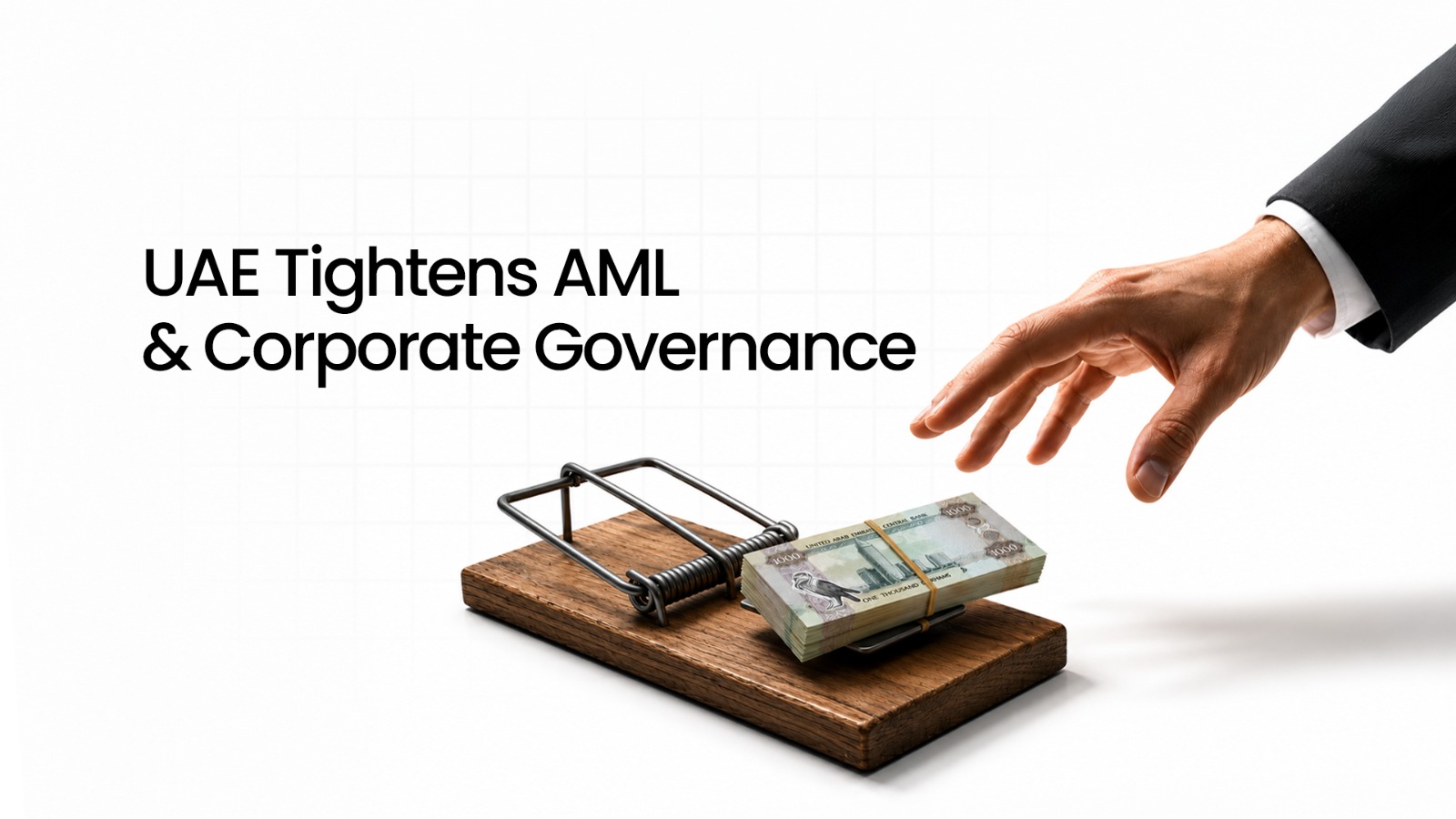
The United Arab Emirates has taken another decisive step to cement its reputation as one of the world’s most trusted and investor-friendly business destinations. In a recent meeting of the country’s Economic Integration Committee, senior officials reviewed a fresh set of measures designed to strengthen corporate governance, tighten the framework for anti-money laundering and terrorist financing (AML/CFT), and raise the overall competitiveness of the national business environment.
For company owners, investors, finance leaders, and compliance teams operating in the UAE, these corporate governance and anti money laundering rules are more than policy headlines. They signal where regulatory expectations are heading and what businesses need to do now to stay compliant, credible, and competitive.
Here is a clear breakdown of what was announced, why it matters, and how your business can prepare.
What the Economic Integration Committee Announced
The meeting was chaired by Abdulla bin Touq Al Marri, Minister of Economy and Tourism, and brought together the directors-general of the UAE’s economic development departments. Rather than focusing on a single reform, the Committee reviewed a connected set of priorities that together shape the country’s business and regulatory landscape.
The key themes on the agenda included:
- Stronger corporate governance frameworks for companies operating across the UAE
- A reinforced legislative framework to combat money laundering and terrorist financing
- Enhanced market oversight, including tighter monitoring of retail outlets and essential commodity prices
- Development of the intellectual property (IP) ecosystem
- New regulation of finance lease activities to support small and medium-sized enterprises (SMEs)
Underpinning all of this is the UAE’s continued investment in digital and data-driven governance, including a newly launched AI-powered regulatory ecosystem and a National Programme for Developing the Statistics System. These tools are intended to make legislation more proactive, evidence-based, and aligned with international best practices.
Why Corporate Governance Is Moving Up the Agenda
Corporate governance refers to the systems, rules, and processes by which companies are directed and controlled. Strong governance protects shareholders, builds investor trust, and reduces the risk of fraud and mismanagement.
The UAE’s renewed focus on governance is aimed at making it easier and safer to do business. The Committee discussed how modern governance frameworks can help companies operate a wider range of economic activities more efficiently, while improving the services delivered to businesses, investors, and stakeholders.
In practical terms, the direction of travel is clear:
- Governance practices are being aligned more closely with global standards
- Procedures for businesses and investors are being streamlined and simplified
- The goal is to reinforce the UAE’s standing as an international hub for business and capital
For companies, this means governance is no longer a “nice to have.” Board-level accountability, transparent decision-making, and documented internal controls are increasingly the baseline expectation.
A Sharper Focus on Anti-Money Laundering (AML/CFT)
One of the strongest signals from the meeting was the UAE’s ongoing commitment to combating money laundering and the financing of terrorism. The Committee reviewed national initiatives designed to enhance investor confidence and protect the integrity of the country’s financial and business environment.
This aligns with a broader national trend. Over the past year, UAE authorities have steadily raised AML/CFT expectations — shifting the emphasis from simply documenting compliance to actively demonstrating effective risk detection, escalation, and reporting.
For businesses, particularly those in financial services, real estate, trade finance, precious metals, and professional services, the implications are significant. Regulators increasingly expect:
- Robust Know Your Customer (KYC) and customer due diligence processes
- Effective transaction monitoring and sanctions screening
- Clear governance and accountability, including a properly empowered compliance function
- Reliable beneficial ownership transparency
- Timely and accurate regulatory reporting
Companies that treat AML compliance as a genuine risk-management discipline – rather than a paperwork exercise will be far better positioned as enforcement continues to tighten.
Market Oversight and Consumer Protection
The Committee also reaffirmed the importance of ongoing oversight of markets and essential commodity prices. A dedicated team, drawing on representatives from the Ministry of Economy and Tourism and other national entities, is developing an integrated framework to monitor prices based on transparent and clearly defined criteria.
The objectives of corporate governance and anti money laundering rules are practical and consumer-focused: preserving market stability, protecting consumer rights, safeguarding supply chains, and ensuring the uninterrupted availability of essential goods. For retailers and distributors, this calls for closer scrutiny and a growing expectation of fair and transparent pricing practices.
Support for SMEs Through Finance Lease Regulation
A notable business-friendly element of the announcement was the move to regulate finance lease activities undertaken by entities not supervised by the Central Bank of the UAE.
Finance leasing allows businesses to acquire equipment and assets without a large upfront capital outlay – a major advantage for SMEs and growing companies. The reforms are intended to diversify financing options and attract international leasing providers to the UAE market.
The framework is expected to support key sectors such as industry, logistics, healthcare, and technology, covering assets including trucks, aircraft, IT systems, industrial and medical equipment, production lines, and construction and energy equipment.
For capital-intensive businesses, this is a welcome step toward more flexible and accessible financing.
What These Changes Mean for Your Business
Taken together, these reforms reflect a consistent message: the UAE wants to be both highly competitive and highly credible as a global business hub. That combination benefits legitimate businesses — but it also raises the bar on compliance.
Here are practical steps to stay ahead:
- Review your governance structure. Ensure roles, responsibilities, and decision-making processes are clearly defined and documented at board and management level.
- Audit your AML/CFT controls. Assess your KYC, due diligence, transaction monitoring, and reporting processes against current expectations, and close any gaps.
- Confirm beneficial ownership records are accurate and up to date. Transparency here is under increasing scrutiny.
- Strengthen your compliance function. Whether in-house or outsourced, ensure it has the authority, resources, and independence to be effective.
- Stay informed. Regulatory expectations in the UAE are evolving quickly. Ongoing monitoring – or a trusted advisory partner – is essential.
The Bottom Line
The UAE’s latest moves to strengthen corporate governance and anti money laundering rules are a clear signal of intent: to protect investors and consumers, safeguard the financial system, and reinforce the country’s position as a leading global business hub.
For businesses, this is an opportunity as much as an obligation. Companies that embrace strong governance and robust compliance will not only avoid regulatory risk — they will build the trust and credibility that attract investors, partners, and long-term growth.
How We Can Help
Navigating evolving corporate governance and AML/CFT requirements can be complex. Tass & Hamjit team supports businesses across the UAE with corporate governance advisory, AML/CFT compliance, risk assessments, KYC and due diligence frameworks, and ongoing regulatory support — so you can focus on growth with confidence.
Get in touch with our advisory team today to review your compliance readiness.
Disclaimer: This article is for general information purposes only and does not constitute legal, financial, or professional advice. Businesses should seek tailored guidance based on their specific circumstances.
About The Author
